Prioritising Liveability and Sustainability
03 August 2026
by The Edge


Gamuda Land, the property division of Gamuda Bhd (KL:GAMUDA) believes that developers have the responsibility to shape how people live and the developer sure does walk the talk. For decades, the developer has shown its commitment to ensure the liveability and sustainability of the townships it has built.
Going beyond what is required has always been the mantra, says its chief operating officer Jess Teng.
“Today, buying a house is one of the biggest decisions in a person’s life. They are not just buying four walls; they’re buying a lifestyle. They are buying a place where they can grow their families, raise their children, create memories and even spend their retirement.”
In the past, Teng says the developer believed that building homes and delivering them on time, together with the amenities and infrastructure, was what made us a responsible developer. But over time, she says that definition has evolved.
“Today, it’s about understanding what truly matters to the people who live there. We always ask ourselves one very important question: what is the long-term value we are creating for the people who live here?
“For us, being a responsible developer isn’t just about the moment we hand over the keys. It’s about how we can continue creating long-term value for the people who live there and even for the next few generations.”
For its well-curated projects and elaborate afterthoughts, Gamuda Land was awarded The Edge Malaysia Responsible Developer Award in The Edge Malaysia Best Managed & Sustainable Property Awards 2020. In conjunction with the awards’ 10th-year anniversary, the developer has been inducted into The Edge Malaysia Responsible Developer Hall of Fame.
Planning long-term sustainability early on
For Gamuda Land, Teng says every development goes through three key design principles at the drawing board itself: namely people, nature and future. She calls this the “smart township approach”.
“When people hear the term smart township, the first thing that comes to mind is usually technology. To us, being smart is really about understanding what people need, understanding nature and also anticipating what is coming in the future. That is how we apply it in Gamuda Cove.
“If we start with people, our goal is very simple; we want people to enjoy living here. That’s why in Gamuda Cove, every home is within about 350m to 500m of a park or green space. At the same time, all the neighbourhoods are connected by pedestrian walkways and cycling paths.
“We also introduced the autonomous shuttle service. I think we are one of the first townships to have this, mainly to help with that last-mile connection and reduce the reliance on private vehicles.”
Beyond that, Teng says Gamuda also looks at how to bring different components of the township, such as residential, commercial, educational and recreational, together as a mini city.
“We want people to spend more time within the township. When people spend more time here, they enjoy living here more. They get to know their neighbours, they start building a community and naturally the township becomes more vibrant.
“So I think that’s really how we look at a smart township. It’s not just about putting in more technology. It is about creating a township that is planned in a smarter way, so people can enjoy living there today while still being ready for the future.”
In addition, Teng says nature is a significant part of a township as well.
“I think people often assume nature should come first but our approach is slightly different. We don’t force our plans onto nature. Instead, we look at the opportunities to preserve what is already there.
“And beyond preserving nature, we also look at how we can integrate it into residents’ everyday lives. We truly believe everyone should be able to enjoy and experience nature as part of their daily routine. That is why nature is such an important part of our township planning.”

For us, being a responsible developer isn’t just about the moment we hand over the keys. It’s about how we can continue creating long-term value for the people who live there and even for the next few generations.” — Teng
A worthy investment
Teng says the investment of all these design and planning considerations is a challenge for the developer but they would do it all over again nevertheless.
“For us, it’s not just about spending more money. At the early planning stage, we bring together experts from different disciplines such as landscape architects, master planners, designers and infrastructure engineers.”
By investing in the right expertise early on, she says the developer will be able to design better from the start. This has helped to reduce execution risks, address climate-related challenges and ensure the township is more sustainable to maintain in the long run.
“Take Gamuda Cove as an example. Some people may ask why we invested in building the parks so early. We have a 50-acre Central Park and a 90-acre Wetlands Arboretum Park, making up around 140 acres of green spaces. Yet we completed these even before the first residents moved in.
“We do this to promote quality living from day one. At the same time, the lakes within the parks also serve as water retention ponds. But instead of treating them purely as engineering infrastructure, we asked ourselves how we could create more value from them. That is why we transformed them into beautiful public parks, planted more trees, enhanced biodiversity, improved thermal comfort and created more spaces for the people.”
Teng says the most important thing is how to strike a balance between short-term commercial considerations and long-term value creation.
“We strongly believe that parks and public spaces are investments worth making right from the early stages of development. These are the elements that improve people’s quality of life and their overall living experience.
“More importantly, these are the fundamentals that shape how people live. So while there may be an upfront cost, we believe in the long-term value it creates for our residents, the community and ultimately the township itself.”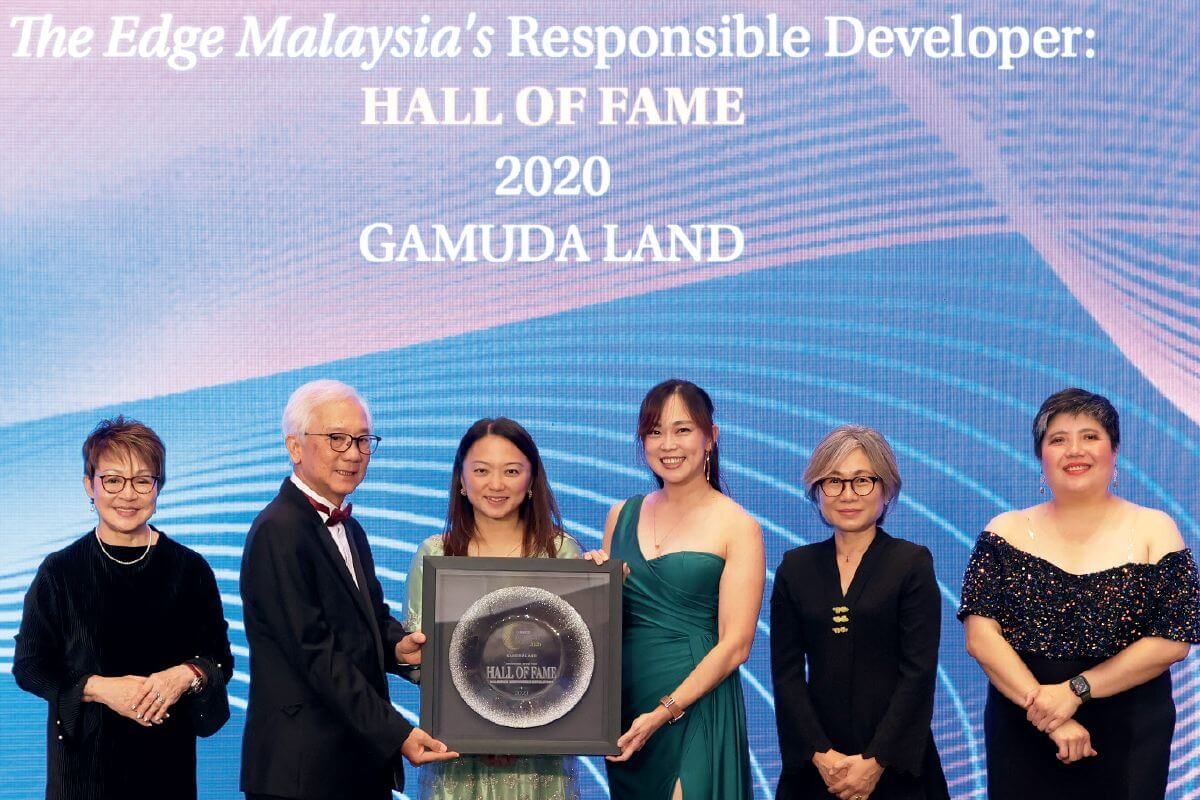
Gamuda Land chief operating officer of project operations Wong Siew Lee (fourth from left) with (from left) The Edge Malaysia editor emeritus and the awards’ chief judge Au Foong Yee, The Edge Media Group publisher and group CEO Datuk Ho Kay Tat, Minister in the Prime Minister’s Department (Federal Territories) Hannah Yeoh, The Edge Malaysia editor-in-chief Kathy Fong and City & Country senior editor E Jacqui Chan (Photo by Mohd Izwan Mohd Nazam/The Edge)
Pushing ahead
For future Gamuda Land projects, Teng says the developer will continue to apply its smart township approach.
“This has already become part of the DNA of all our townships. From our first township, Kota Kemuning in Shah Alam, Selangor, back in 1995, to our latest township, Gamuda Cove, we have consistently practised this approach. If you look at our more established townships, such as Kota Kemuning in Selangor and Horizon Hills in Johor, we have consistently received very positive feedback from our resident surveys.
“In fact, one of the top reasons people choose a Gamuda Land home is because of our parks and green spaces. For us, that is a strong validation that our investment in green spaces and community areas is creating real value for our residents. It reinforces our belief that these spaces play an important role in bringing communities together and enhancing the overall quality of life in our townships.”

Latest Stories
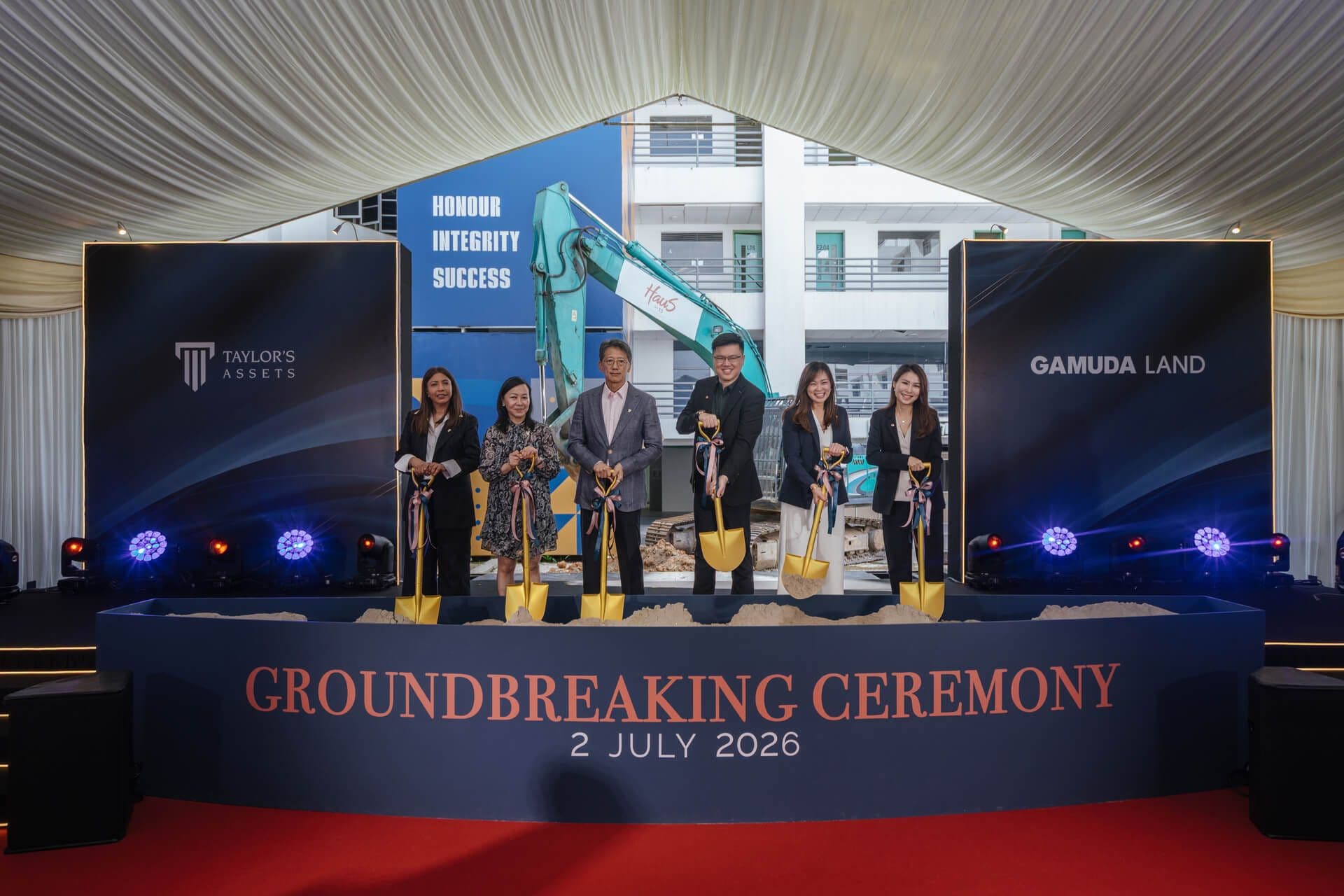
Gamuda Land, Taylor's Assets team up on RM540mil SS15 mixed-use project
02 July 2026
by New Straits Times


Beyond borders: Gamuda Land advances regional growth strategy to double earnings
24 April 2026
by Channel News Asia


