Gamuda Land's Meaningful Diversification in Vietnam
11 November 2026
by The Star


Gamuda Land’s expansion in Vietnam has emerged as a significant contributor to its regional property business, generating approximately RM6.8bil in sales and RM1.2bil in profit before tax (PBT) over the past three financial years (FY24 to FY26).
The performance reflects a deliberate strategy of diversifying beyond Malaysia by identifying opportunities in Vietnam’s expanding urban centres, where economic development, infrastructure investment and growing housing demand are reshaping the property market.
In FY26 alone, Vietnam contributed RM601mil in PBT, exceeding the property division’s overall reported PBT for the year.
Rather than just chasing growth, Gamuda Land has focused on building a business that prioritises local demand, strategic site selection, trusted partnerships and efficient project delivery.
Capturing opportunities in a fast-growing economy
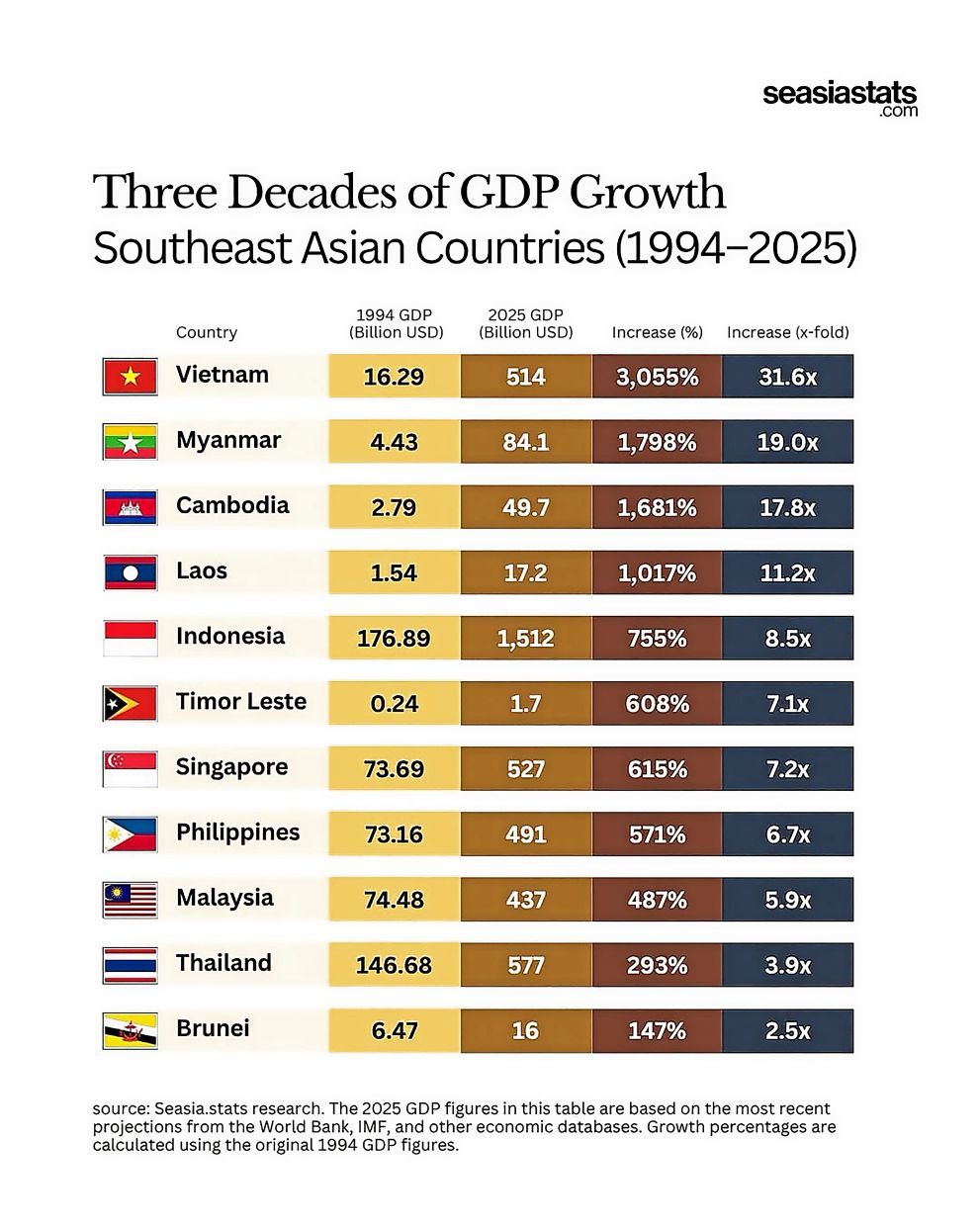
Vietnam’s remarkable economic transformation saw its gross domestic product (GDP) surge from US$16bil in 1994 to an estimated US$514bil in 2025, establishing the country as a major global hub for manufacturing, trade and investment.
This growth momentum continued into FY26, with Vietnam’s GDP expanding by an estimated 9.01 per cent year-on-year in the first nine months, according to its National Statistics Office.

Driven by strong performance in manufacturing, construction and services, third-quarter growth accelerated to 9.95 per cent, reinforcing confidence as the government targets at least 10 per cent growth for the full year.
Vietnam’s expanding economy, rising incomes and continued urbanisation are also reshaping its residential landscape.
As major cities attract investment, businesses and employment opportunities, demand for well-located housing supported by transport infrastructure and essential amenities is becoming increasingly important.
For Gamuda Land, the opportunity lies in targeting specific growth corridors, leveraging supporting infrastructure as well as meeting the evolving needs of urban residents and workers.
The developer has established its presence across three of Vietnam’s major economic centres – Ho Chi Minh City, Hanoi and Hai Phong – positioning its business to capture demand arising from different growth corridors and economic activities.
Targeting high-demand infrastructure
Infrastructure connectivity is a key consideration in Gamuda Land’s investment decisions, particularly the relationship between residential locations, employment centres, transport networks and the daily needs of homebuyers.
In Ho Chi Minh City, major transport investments, including Metro Line 1, Ring Road 3 and the expanding expressway network, are reshaping accessibility and opening up new development corridors.
Gamuda Land’s projects, including Eaton Park, Elysian and Springville, are positioned to benefit from improving connectivity and the wider economic development of their respective locations.
Elysian, located in Thu Duc City, benefits from access to major transport corridors including Ring Road 3 and the Long Thanh–Dau Giay Expressway, while Springville, in neighbouring Dong Nai, is strategically located within the broader growth corridor surrounding Long Thanh International Airport.
In Hanoi, Gamuda Land’s established Gamuda City township represents a longer-term investment in creating a community supported by infrastructure, amenities and green spaces.
The anticipated Central Park launch will build on this established development foundation.
Further north, Hai Phong presents another growth opportunity. As one of Vietnam’s important industrial and port cities, its manufacturing activities, logistics infrastructure and connectivity to Hanoi through the Hanoi–Hai Phong Expressway are supporting economic expansion and creating new residential demand.
The city’s gross regional domestic product (GRDP) grew by 12.08 per cent in the first nine months of FY26, ranking third nationwide and reinforcing its position as one of Vietnam’s fastest-growing economic centres.
Together, these markets provide Gamuda Land with exposure to different economic drivers and residential segments, reducing reliance on a single city or growth corridor.
“We see tremendous opportunities in Vietnam, but growth alone does not guarantee success. The real differentiator is knowing where and how to participate in that growth.
“We look closely at infrastructure, employment centres and the needs of genuine homebuyers before committing to a project. Just as importantly, we need the right partners and the ability to execute.
“That discipline is what has enabled Vietnam to become a meaningful contributor to our business,” said Gamuda Land chief executive officer Gim Teck Yew.
Synergy through partnerships
Strategic partnerships are another important element of Gamuda Land’s approach to managing the complexities of international expansion.
The company has sought to collaborate with established regional players whose capabilities complement its own strengths in town-making, masterplanning and project delivery.
Among them are MTR Corporation and Hankyu Hanshin Properties, both recognised for their expertise in transit-oriented developments (TODs), particularly in integrating rail infrastructure with commercial, residential and retail environments.
While its collaboration with Hankyu Hanshin Properties includes the upcoming Norton Park development, Gamuda Land’s partnership with MTR Corporation is broader in nature, aimed at exploring opportunities to leverage their complementary expertise in integrated urban and transit-oriented developments.
Their experience in creating seamless connections between transport networks, workplaces, shopping destinations and homes is increasingly relevant as Vietnam continues to invest in urban mobility and infrastructure.
For Gamuda Land, such collaborations extend beyond finance, blending complementary expertise in planning and development to create connected urban environments that meet evolving Vietnamese homebuyer expectations.
This partnership-led approach also supports more informed development decisions, drawing on the respective strengths and market experience of the parties involved.
Local execution as a competitive advantage
While market selection and partnerships establish the foundation for growth, Gamuda Land also places significant emphasis on execution.
Its Vietnam operations benefit from a locally established construction, sales and operating ecosystem, reducing dependence on foreign labour while enabling closer coordination across different stages of development.
This local execution capability, supported by Gamuda Land’s experience in engineering and project delivery, has enabled the company to achieve construction periods estimated to be 20 per cent to 30 per cent shorter than conventional benchmarks.
Shorter development cycles can improve capital efficiency, enable projects to respond more quickly to market demand and provide greater flexibility in deploying capital across new opportunities.
Importantly, the combination of market knowledge, established partnerships and local delivery capabilities helps the company manage inherent risks of international property development, including changing market conditions, regulatory requirements and construction challenges.
While these risks cannot be eliminated, Gamuda Land’s approach is to manage them through disciplined investment decisions and consistent execution rather than relying on favourable market conditions alone.
Strong foundations for future growth
With its Vietnam business now firmly established as a meaningful contributor to Gamuda Land’s overall performance, the company is prepar-ing for another phase of development.
Over the coming six months, anticipated launches include Norton Park in partnership with Hankyu Hanshin Properties, a new development in Hai Phong, the much-anticipated Central Park high-rise residential within Gamuda City in Hanoi and Enesta in Ho Chi Minh City.
These projects will further strengthen Gamuda Land’s presence across Vietnam’s major urban centres while extending its strategy of identifying and unlocking high-value pipelines backed by strong structural fundamentals.
The next phase of growth will continue to be guided by market absorption, product positioning and execution capabilities, with an emphasis on sustainable returns rather than expansion for its own sake.
For Gamuda Land, its performance in Vietnam demonstrates that meaningful diversification requires more than entering a promising overseas market.
It requires understanding local conditions, identifying where genuine demand exists, working with partners that bring complementary strengths and having the capabilities to deliver.
As Vietnam continues its economic transformation, Gamuda Land intends to build on this foundation, strengthening its regional business while creating developments that respond to the needs of communities and stand the test of time.

Latest Stories

Gamuda Land, Taylor’s Assets launch Haus on 15 in Subang Jaya; Block B fully sold
02 November 2026
by The Edge
Gamuda Land, Dusit International officially open 280-room ASAI Gamuda Cove
12 October 2026
by The Edge Malaysia